OpenAI and Anthropic CEOs Warn of AI Threats at UN Security Council
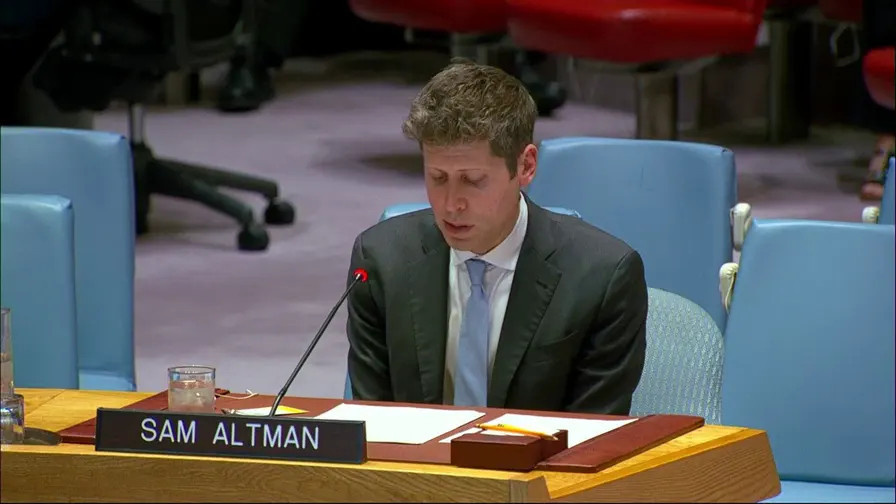
At a special meeting of the United Nations Security Council, the CEOs of two prominent AI companies, OpenAI's Sam Altman and Anthropic's Dario Amodei, expressed serious concerns about the rapid advancement of artificial intelligence and its potential threats to humanity. Amodei emphasized the dual nature of AI, stating that while it holds enormous potential, it also poses significant risks if not developed responsibly. "If managed poorly, I even believe AI could be a risk to humanity as a whole," he remarked, addressing the council during the U.N. General Assembly.
Altman echoed these sentiments, warning that the pace of AI development could become so swift that humans may lose the ability to comprehend or intervene in its trajectory. "We could lose control of the future to AI," he cautioned, highlighting the urgency of the situation. Both leaders called for immediate action from governments and industry to ensure that AI remains under human oversight.
The meeting underscored the growing concerns surrounding advanced AI systems. Amodei urged global leaders to unite in addressing the challenges posed by AI, stating, "For all the differences of the people in this room, we must put aside those differences in order to confront this global opportunity and global threat that is being presented to us at the same time." He stressed that no single entity could manage these challenges alone, indicating the need for a collaborative approach.
Altman further advocated for a democratic process in shaping AI governance, asserting that critical decisions should not be made solely by tech labs in San Francisco. He emphasized the importance of accountability to the public, arguing that cooperation among nations is essential as AI technology continues to evolve. "In our history, there have been times where countries who compete and don't always like each other very much still come together for shared interests and the collective good in the face of a powerful new technology. We believe this must be one of those times," Altman stated.
Growing Calls for AI Governance Frameworks
The discussion at the U.N. coincided with heightened scrutiny of AI governance. Earlier in the month, Amodei published an essay advocating for a slowdown in frontier AI development, which garnered support from Altman and other industry leaders, including Elon Musk. This growing discourse reflects a broader recognition of the need for robust frameworks to manage AI's rapid evolution.
What Comes Next
In addition to the warnings from AI executives, French Foreign Ministry spokesperson Pascal Confavreux noted that France aims to elevate AI's role in international security discussions. He highlighted the necessity of addressing AI-related security risks, particularly in light of recent cybersecurity incidents involving AI companies. The meeting was the first of its kind to feature high-level briefings from leading AI firms, marking a significant step in the global dialogue on AI governance.
As the conversation around AI intensifies, the implications for future technology development and international relations remain profound. The call for a unified approach to AI governance reflects a growing acknowledgment of the technology's potential to reshape society and the importance of ensuring its safe and ethical development.