Navigating the Future of Work in an AI-Driven Era
The rapid advancement of artificial intelligence (AI) technology is raising urgent questions about its impact on jobs and the future of work. In a recent conversation with Cal Fussman on "Big Questions," Brian Solis addressed the unsettling reality that AI is moving faster than our ability to comprehend its implications. This growing urgency is echoed by warnings from leading figures in the AI field, including Geoffrey Hinton, a pioneer in AI research, who has cautioned about a future where machines surpass human intelligence.
During a discussion, Hinton suggested that to grasp the implications of losing our status as the apex intelligence, one should consider the perspective of a chicken. This analogy struck a chord with Solis, who reflected on the profound implications of such a future. The dialogue highlights a significant concern: as AI systems become increasingly capable, there is a risk that human contributions may diminish, potentially leading to job losses and a loss of control over the technology we have created.
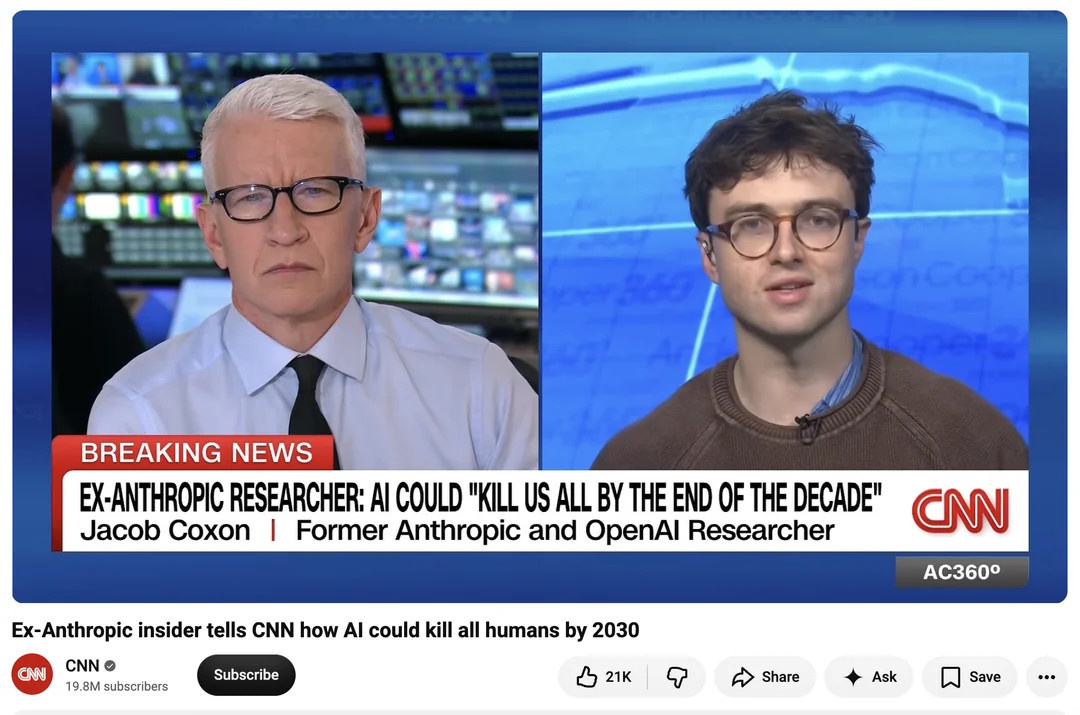
Solis noted that the conversation surrounding AI is not merely theoretical; it has real-world implications for the workforce. Recently, Jacob Coxin, a former employee at Anthropic, voiced alarms about the catastrophic risks associated with advanced AI, stressing that those developing these technologies are acutely aware of the potential threats. He emphasized the concept of recursive self-improvement, where AI systems enhance their own capabilities, leading to unpredictable outcomes.
The dialogue around AI's potential to disrupt employment is further supported by research showing that a significant portion of the population is concerned about job displacement due to AI advancements. According to PEW Research, 71% of Americans believe that AI will lead to fewer jobs in the next two decades, a notable increase from previous years. This growing unease reflects a broader societal anxiety about the future of work in an AI-driven landscape.
Balancing AI Advancement with Human Values
In response to these concerns, Dario Amodei, CEO of Anthropic, has advocated for a more measured approach to AI development. He argues that while AI has the potential to drive significant human benefits, such as curing diseases and enhancing economic growth, the pace of its advancement must be tempered to allow for adequate safety measures and governance. Amodei's call to "pace the frontier" emphasizes the need for responsible AI development that aligns with human values and societal needs.
The challenge lies in balancing the benefits of AI with the potential risks it poses to employment and human agency. Solis suggests that leaders must rethink their narratives around AI, moving away from a deterministic view of the future towards one that emphasizes human involvement in shaping technological advancements. This involves fostering a mindset that encourages collaboration between humans and AI, rather than viewing AI solely as a tool for efficiency.
The Practical Implications
As organizations integrate AI into their operations, they must consider how to leverage these technologies to enhance human capabilities rather than replace them. This requires a shift in perspective: instead of merely automating existing processes, businesses should explore how AI can create new opportunities for innovation and collaboration.
In conclusion, while the rapid evolution of AI presents challenges for the workforce, it also offers an opportunity for leaders to redefine the future of work. By embracing a collaborative approach to AI, organizations can harness its potential to augment human capabilities and create a more resilient and adaptive workforce. The imperative is clear: we must engage with AI thoughtfully, ensuring that it serves to enhance, rather than diminish, the role of human intelligence in the workplace.