YouTube Music Introduces Labels for AI-Generated Songs
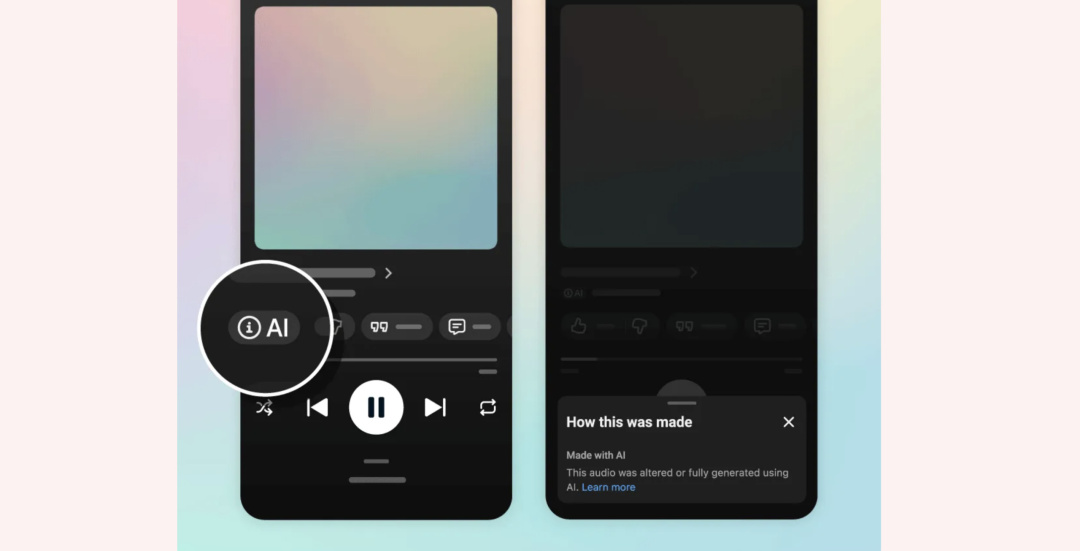
YouTube Music has begun implementing labels that identify songs created primarily with generative artificial intelligence, marking a significant shift in how streaming services inform listeners about the nature of music recordings. This new system combines disclosures from record labels and distributors with YouTube’s own detection technology, raising important questions regarding the classification of AI-generated and AI-assisted music across its platform.
In an announcement made on October 14, YouTube indicated that these labels are a response to listener demand for greater transparency regarding the use of generative AI in music. Initially, the feature is being rolled out on YouTube Music, with plans to extend the labeling system to the main YouTube app in the future.
This initiative comes at a time when streaming services are under increasing pressure to clearly distinguish between recordings made by human musicians and those generated substantially or entirely by AI systems. When a song is identified as having been created primarily using generative AI, YouTube Music will display a label directly on its player page. Users can click on the label to access a menu that provides additional details about the recording’s AI classification.
YouTube provides an example of a song where a generative model created both the composition and vocals, which falls within the scope of the new labeling system. Rather than relying solely on artists or distributors to disclose the use of AI, YouTube is integrating partner-supplied information with its detection tools, a departure from systems that depend entirely on voluntary metadata declarations.
The primary goal of this initiative is to provide listeners with more information about the music they encounter, rather than to impose restrictions on the distribution of AI-generated recordings. YouTube has not announced any general ban on AI-generated music as part of this labeling rollout.
To assist music partners, YouTube has published technical guidance outlining how to disclose generative AI use when delivering recordings. This guidance establishes three classifications: Fully Gen AI, Partly Gen AI, and No Gen AI. The Fully Gen AI category applies to recordings where all content was created using generative AI, such as a song generated entirely by an AI music tool based on a user’s text prompt. The Partly Gen AI category includes recordings where generative AI contributed to only part of the finished work, such as when an artist uses AI to generate a bassline but records original vocals.
Interestingly, YouTube's classifications extend beyond the audio recording itself. A song featuring entirely human-performed audio may still receive a partial AI designation if its accompanying music video uses AI-generated visuals. YouTube distinguishes generative AI from established production technologies, clarifying that using tools like Auto-Tune for minor pitch corrections does not qualify as generative AI use.
Most independent musicians do not deliver recordings directly to streaming services; they typically use distributors to transmit audio files, artwork, ownership information, and other metadata to platforms like YouTube Music. Under the new framework, music partners can include generative AI declarations when delivering recordings through supported DDEX metadata formats or CSV templates. YouTube specifies that for DDEX deliveries, version ERN 4.3.2 or later must be used.
Concerns Over AI Classification Accuracy
One of the notable aspects of this policy is that YouTube does not intend to rely solely on information submitted by music partners. The company has indicated that it may use additional signals to supplement partner declarations. If a partner does not provide AI information for a recording, YouTube may classify the content as fully or partially AI-generated based on these signals. However, the company has not disclosed the methods or accuracy of these detection tools, nor how disputes over AI classifications will be resolved.
This raises significant concerns for artists whose music might be incorrectly identified as AI-generated. False classifications could stem from limitations in automated detection, incomplete metadata, or variations in how distributors interpret the available categories. YouTube has not established a public appeals process specifically for these new music labels, leaving artists uncertain about how to contest incorrect classifications.
Another critical consideration for musicians is whether these new classifications will impact how their recordings are promoted or monetized. Currently, YouTube has not announced any changes to music royalty payments, recommendation eligibility, or search rankings associated with these labels. While the company has stated that a disclosure label alone would not affect a video’s recommendation eligibility or revenue potential, this statement pertains to its broader video labeling system and does not definitively cover all aspects of the new music classification framework.
The confirmed change is an increase in transparency for listeners, rather than a new royalty structure or restrictions on AI-generated songs. YouTube’s announcement follows similar initiatives from competing streaming platforms. Apple Music plans to implement AI Transparency Tags visible to listeners as Made With AI labels by 2026, while Spotify has begun testing AI disclosures in song credits.
TIDAL has taken a more restrictive approach by announcing plans to identify fully AI-generated music and exclude it from royalty payments. In contrast, Deezer has developed its own AI music detection technology and recently announced that users can exclude fully AI-generated music from search results.
These developments highlight the varying approaches streaming platforms are taking regarding AI music, with some focusing on transparency while others impose restrictions on discovery or monetization. For independent musicians, YouTube’s guidance offers a clearer distinction between generative AI contributions and traditional production technology. Artists should be aware that YouTube’s categories may apply to video content as well, necessitating disclosure even when the song itself was created entirely by human musicians.
The Practical Implications
As independent artists navigate these new requirements, they should ensure accurate information about the tools used in creating their recordings and videos. Documenting which elements were generated by AI can help prevent inaccuracies in declarations, especially when multiple collaborators are involved. Additionally, the perception of AI labels by listeners may vary, depending on whether a song was entirely generated or contains a minimal AI-assisted component.
YouTube Music’s new labels signify a step toward standardizing AI disclosure within music metadata. For years, digital distribution has relied on information identifying artists, recordings, and other contributors. Now, AI classifications are becoming an essential category of information that music companies may be expected to provide. Whether these classifications will eventually influence royalties, recommendations, or other platform policies remains an open question. For independent musicians, the immediate change is the growing importance of understanding how generative AI is defined and disclosed by the services distributing their work, as they face the challenge of maintaining consistent, accurate information across different platforms with varying standards.